Dewapoker: Understanding Online Poker Platforms for Beginners
Online poker platforms can attract considerable attention because they combine traditional card-game mechanics with internet-based services. For beginners, however, it is important to understand what these platforms are, how online gambling works, and what risks may be involved before interacting with any gambling website. The term dewapoker may appear in online searches, but simply finding a platform does not mean that it is appropriate or safe for every person.
What Is an Online Poker Platform?
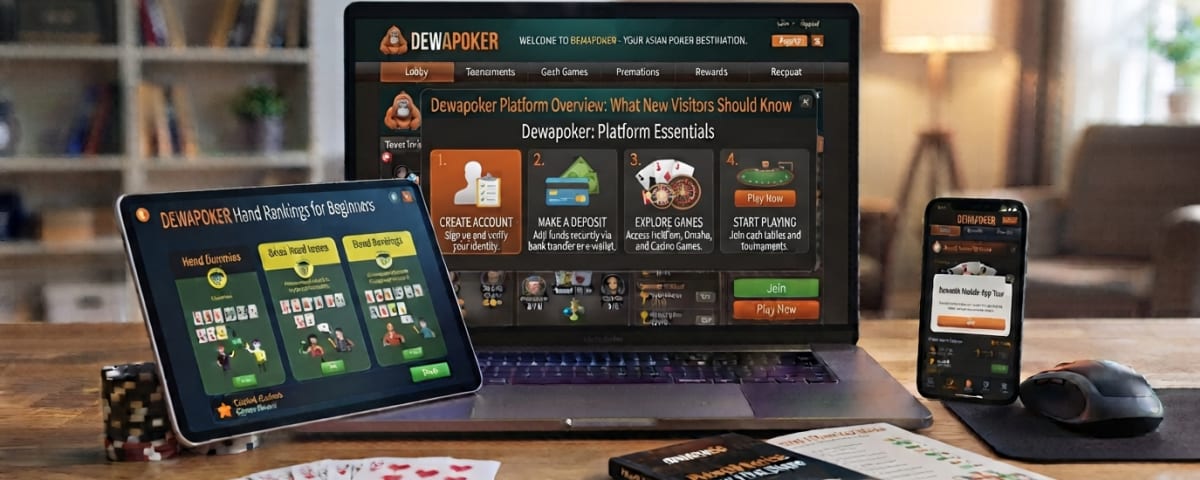
An online poker platform is a website or service that provides poker-related games through the internet. Depending on the jurisdiction and the particular service, platforms may offer different game formats, account systems, payment methods, and promotional features.
Unlike casual poker played with friends, online gambling can involve real money. This makes it different from playing a free game for entertainment. Users should therefore pay attention to local laws, age restrictions, privacy policies, and the financial risks associated with gambling services.
What Should Beginners Understand?
A beginner should first recognize that poker involves uncertainty. Winning is never guaranteed, and repeated play can result in financial losses. Promotional offers or attractive advertisements should not be interpreted as promises of profit.
It is also useful to understand the difference between free-to-play poker and real-money poker. Free games can provide an opportunity to learn the basic rules without financial stakes, while real-money gambling introduces the possibility of losing money.
Another important consideration is personal information. Online platforms may request account details or other information, so users should understand how their data is collected, stored, and used.
Why Do Age Restrictions Matter?
Gambling services commonly have minimum-age requirements because of the financial and behavioral risks associated with gambling. These restrictions exist to protect young people from activities that can lead to financial harm or unhealthy gambling habits.
Anyone below the legal gambling age should not create or use a real-money gambling account. Instead, they can learn poker as a card game through educational material or non-gambling versions that do not involve money or prizes.
What Questions Should Someone Ask?
Before considering any online gambling service, adults should ask several basic questions:
- Is the service legally permitted in my location?
- Does it have appropriate age verification?
- Are its terms and conditions easy to understand?
- What information does it collect?
- What financial risks are involved?
- Is there information about responsible-gambling protections?
These questions can help people make informed decisions rather than relying solely on advertisements or promotional claims.
Conclusion
Understanding an online poker platform requires more than knowing how the game itself works. Beginners should consider legality, age requirements, privacy, financial risk, and responsible use. For young people, real-money gambling should be avoided altogether. Learning poker through free, non-gambling formats can provide an understanding of the game's rules without introducing financial risks.


